A Virtual Coffee
The simplest door, and the one I'd point you to first. Thirty minutes, a real conversation about where you actually are, and no pitch waiting at the end of it. Most of the work I do with people starts exactly here.
Work with AlexisParts Work · Attachment · Self-Leadership
Tired of the same relationship patterns. Tired of the indecision. Tired of the endless debate inside your own head — stay or go, dream big or play safe, am I too much or not enough?
Those parts hold fears and pain that have never had a safe place to land. And that dull ache you feel? That's another part of you — exhausted from working so hard to push them down. Imagine the energy you'll reclaim when they can finally rest.
Sound familiar?
This work isn't just about relationships. It's about acknowledging all of the chaos and conflict in your mind that's making you so tired. It's about reclaiming the parts of you that hold the pain — the ones that got buried by another part trying to protect you.

Free · about five minutes
Most attachment quizzes hand you a label — anxious, avoidant, secure — and leave you standing there with it. This one goes one layer further: it maps your pattern to the developmental stage where it actually formed.
Because the strategy you're running isn't a flaw in your personality. It's a decision a much younger part of you made, at a moment when it was the smartest option available.
What you'll come away with

Who you'd be working with
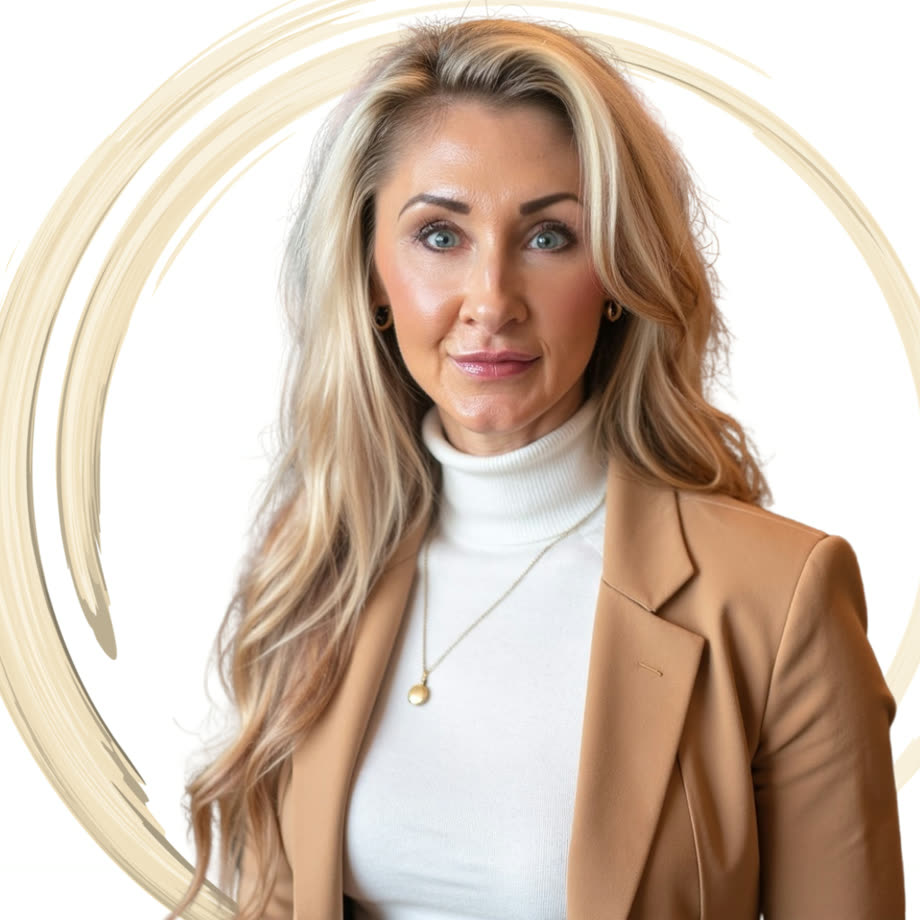
I've been on every side of this work — the client, the student, and now the practitioner. My own path here was not a straight line, and the part that mattered most was discovering that insight alone never moved the pattern. Meeting the parts underneath it did.
For most of my life I kept everything in separate rooms. The student. The professional. The woman who kept choosing people who couldn't choose her back. And then the compartments finally collapsed into each other.
That collapse is the work.
Training & credentials
Coaching, not therapy. If what you need is clinical treatment, I'll tell you plainly and help you find it.
Real Results
Real words from people I've worked with.
I found myself in a toxic relationship cycle that really wasn’t serving me. Alexis helped me untangle it, work through the emotions, and break the cycle I’d been in for a long time — be more compassionate to myself, more vulnerable, more present.
ToddEntrepreneur
She guided me to see how my high-achieving, Type A drive was actually a protective part of myself — giving me the tools to soothe those competing internal demands rather than collapse under the pressure.
Emily BarrowReal Estate Agent, Freeman Home Realty
I genuinely feel like a different person because of the work we’ve done together. I’m more consistent as a dad, clearer and steadier in running my business, and no longer riding the same destructive emotional rollercoaster.
David HauserArchitect & Entrepreneur, Good Haus Atlanta
I was quite tortured by unresolved issues within myself. When I finished I felt freed from stuck patterns. She helped me learn to talk to and appreciate my parts.
Cassandra TruaxTarot Reader, The Tarot Underground
The regression work we did together was a turning point for me. She helped me recognize the barriers I was experiencing and gave me tools to overcome what has been paralyzing in my life. I never want this process to end!
Sarah S.
A demonstration, not a description
Six voices, all talking at once, none of them wrong. Parts work doesn't silence them. It gives each one a turn.
Did I do something wrong?the one that scans for danger
Why haven't they texted back?the one that keeps watch
Don't be needy.the manager
Maybe I'm too much.the one that learned to shrink
Just don't feel it.the one that numbs
You should be over this by now.the critic
click to settle
Nothing here gets silenced. Watch what happens when each one is given its own line.
There's an inner calling in all of us to feel understood. To feel seen. When we feel that — when we accept ourselves, all parts of ourselves — we free up energy that's been locked away. Stuffed down. Showing up as constant tiredness, indecision, procrastination.
Start Here
Whether you've been circling this for years or you found the link an hour ago — every one of these opens into the same work.
The simplest door, and the one I'd point you to first. Thirty minutes, a real conversation about where you actually are, and no pitch waiting at the end of it. Most of the work I do with people starts exactly here.
Work with AlexisSix weeks in a small group, twice a week. There is something about being witnessed by other people doing the same work that 1:1 can't replicate — the moment you stop believing you're the only one built this way.
See the Details →A free 17-page workbook to explore attachment patterns, reflect on your needs, practice communication, and choose small steps toward connection. Work through it at your own pace.
Download Free →Genuinely unsure which one? Then start with the conversation. It costs you half an hour and it's the fastest way to find out whether we're a fit.
Book a CallQuestions people actually ask
Parts work — clinically, Internal Family Systems — starts from the idea that you aren't one voice. There's the part that wants to text back immediately, the part that says don't be needy, and the part underneath both that's simply scared. Instead of picking a side, we get them talking to each other. Underneath all of them is what IFS calls Self: steady, curious, and never damaged. Meeting that is the actual work.
Therapy often looks backward to explain how you got here. Coaching looks at what you're building now. We use the same clinical frameworks — attachment theory, parts work, nervous system regulation — pointed forward. Plenty of my clients do both at once.
No. I have ICF-accredited coach training, over a thousand hours facilitating group therapy, certification as an NLP Master Practitioner, training in Internal Family Systems, attachment theory and nervous system regulation, ordination as a sacred healer, and graduate-level counseling coursework in a CACREP-accredited program. This is coaching, not therapy or medical care. If what you need is clinical treatment, I'll tell you plainly and help you find it.
People who have already done a lot of the work. You've read the books, you've been to therapy, you can explain your attachment style better than most professionals — and you're still having the same argument with yourself at 2am. That isn't a knowledge problem. It's that the part of you that knows and the part of you that's terrified have never actually met.
No. You'll pick up the language as we go. Bring the pattern you're tired of — I'll bring the map.
We start with whatever is live for you that day. From there it's part conversation and part somatic — slowing down enough that your body can follow, finding the part that's running the show, and getting curious about what it's protecting. Most people leave calmer than they arrived, and clearer about what they're actually dealing with.
Yes, and it's a fair thing to ask. We move at the pace your nervous system sets rather than the pace of a curriculum. Nothing gets forced open. If something calls for clinical care, I'll say so.
Yes. Start with a free 30-minute Virtual Coffee — a real conversation, and no pitch at the end. If you'd rather go deep in one sitting, The Invitation is a single 90-minute intensive.
One-to-one is your pattern, at your pace, entirely. The group program is six weeks with a small cohort doing the work alongside you — which offers something individual work can't: you watch other people meet their parts, and it stops feeling strange.